Mini, Standard or Large? Choosing the Right Backhoe Size
Three machine sizes, three kinds of job. How to match the machine to your site access width and the dig depth you need.
Published on July 10, 20261 min read
Start with two numbers
Before asking for a price, measure two things: the width of the access into the site, and the dig depth you need. Those two numbers pick the machine size far more reliably than calling the job "big" or "small".
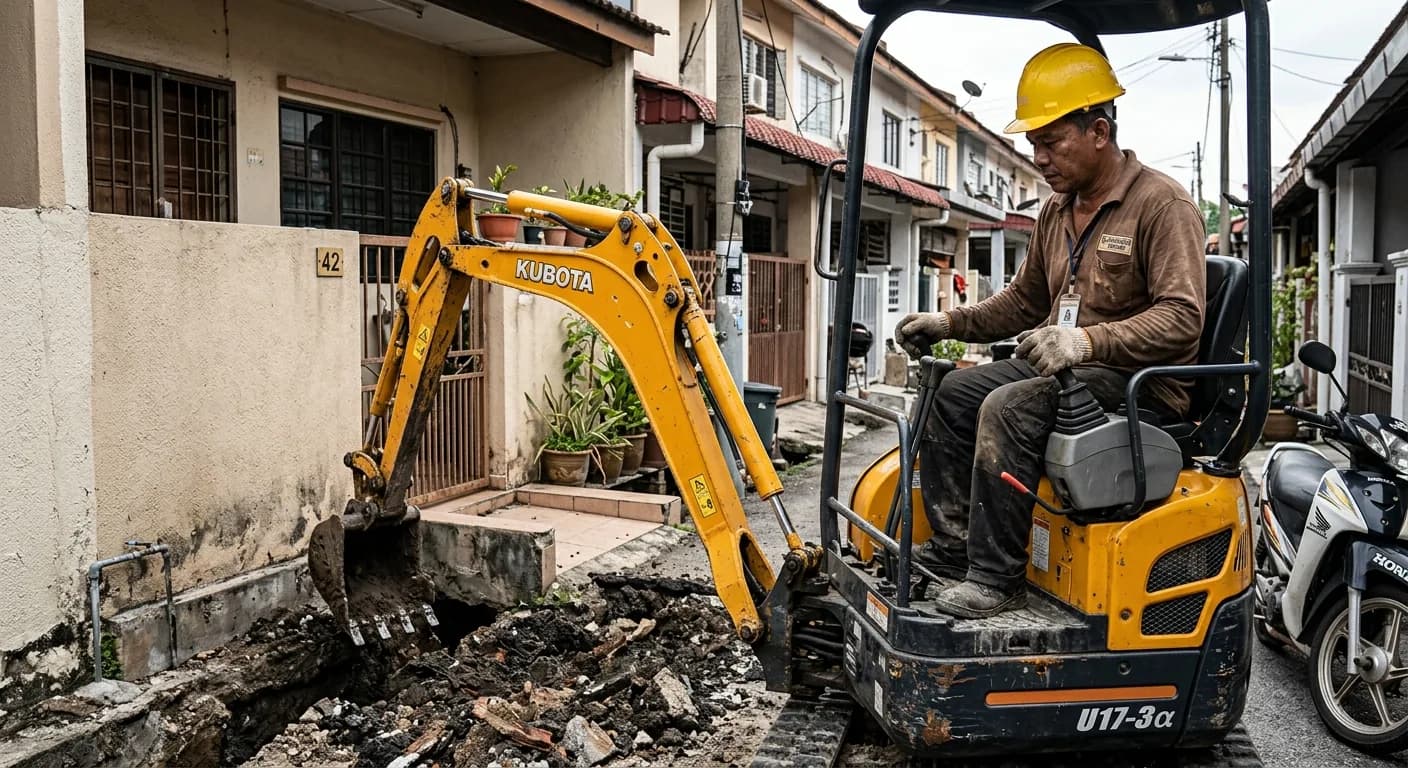
Mini backhoe — digs 6 to 8 feet
Suited to house drainage trenches, pipe work and residential sites down narrow lanes. If your access is under 2.5 metres, this is usually the only machine that fits.
Standard backhoe — digs 12 to 14 feet
The 60–90 HP class, JCB or Case 580. This is the most rented machine because it handles terrace house foundations, larger trenches and general earthworks without being too big for residential roads.
Large backhoe — digs 14 to 15 feet
The 91–105 HP class for heavy work, hard stony ground and light demolition. It needs more turning room.
The common mistake
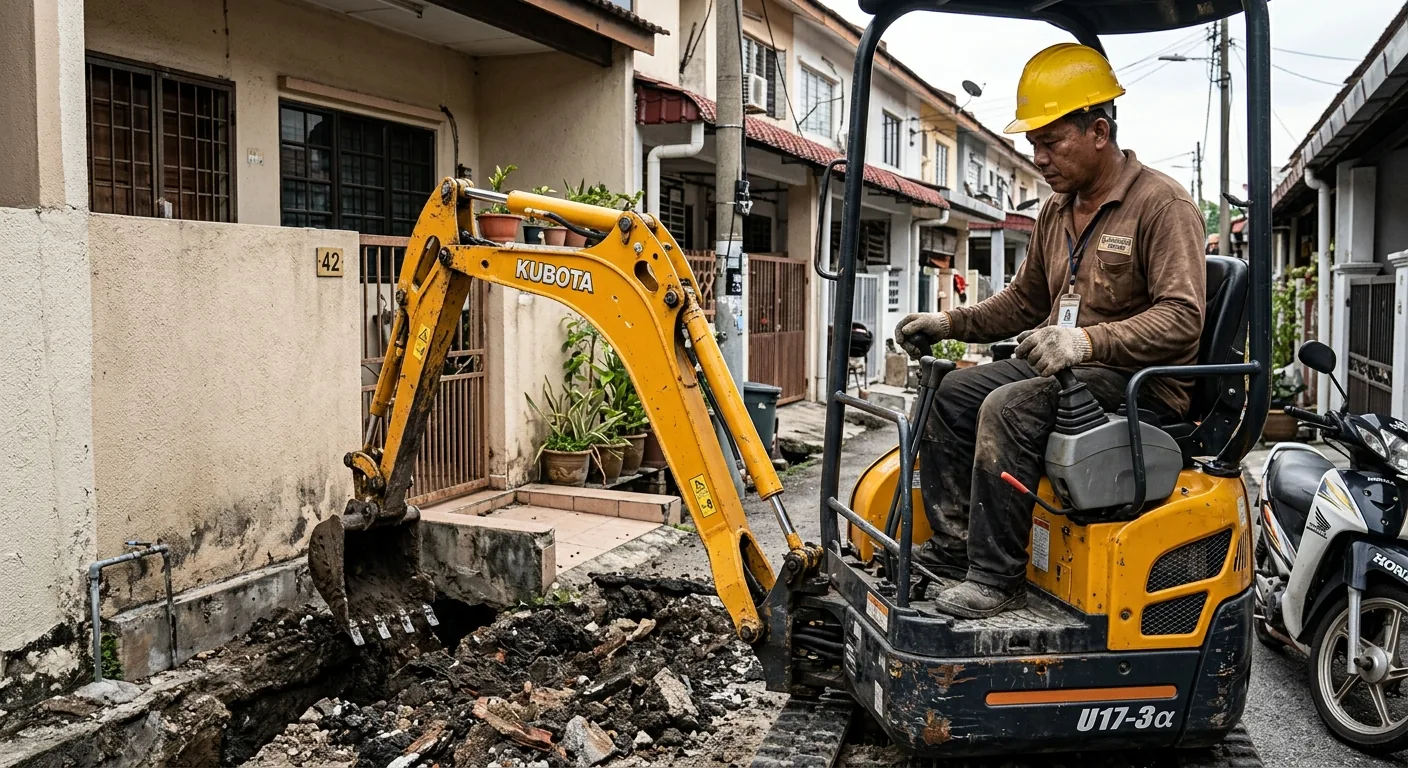
Hiring too big a machine expecting the work to finish faster. On a tight site a large machine spends its time manoeuvring and can damage the road or fencing. A lower day rate means nothing if the job runs longer.
Not sure?
Send the access width and a photo of the site. We will suggest the size and confirm a slot for your area, for example Puchong or Klang.
Matching the size to the actual work
Measure the tightest access first. Under 2.5 metres means a mini backhoe; between 2.5 and 3.5 metres, the standard 60–90 HP machine fits most residential lots.
If you are still torn between two sizes, take the smaller one and add a day. A machine that fits and moves freely almost always finishes faster than a bigger one that has to shuffle for every pass.