Backhoe or Excavator? How to Choose for Your Project
A backhoe digs and loads in one machine; an excavator digs deeper and faster. How to choose based on the work and the site.
Published on July 6, 20261 min read
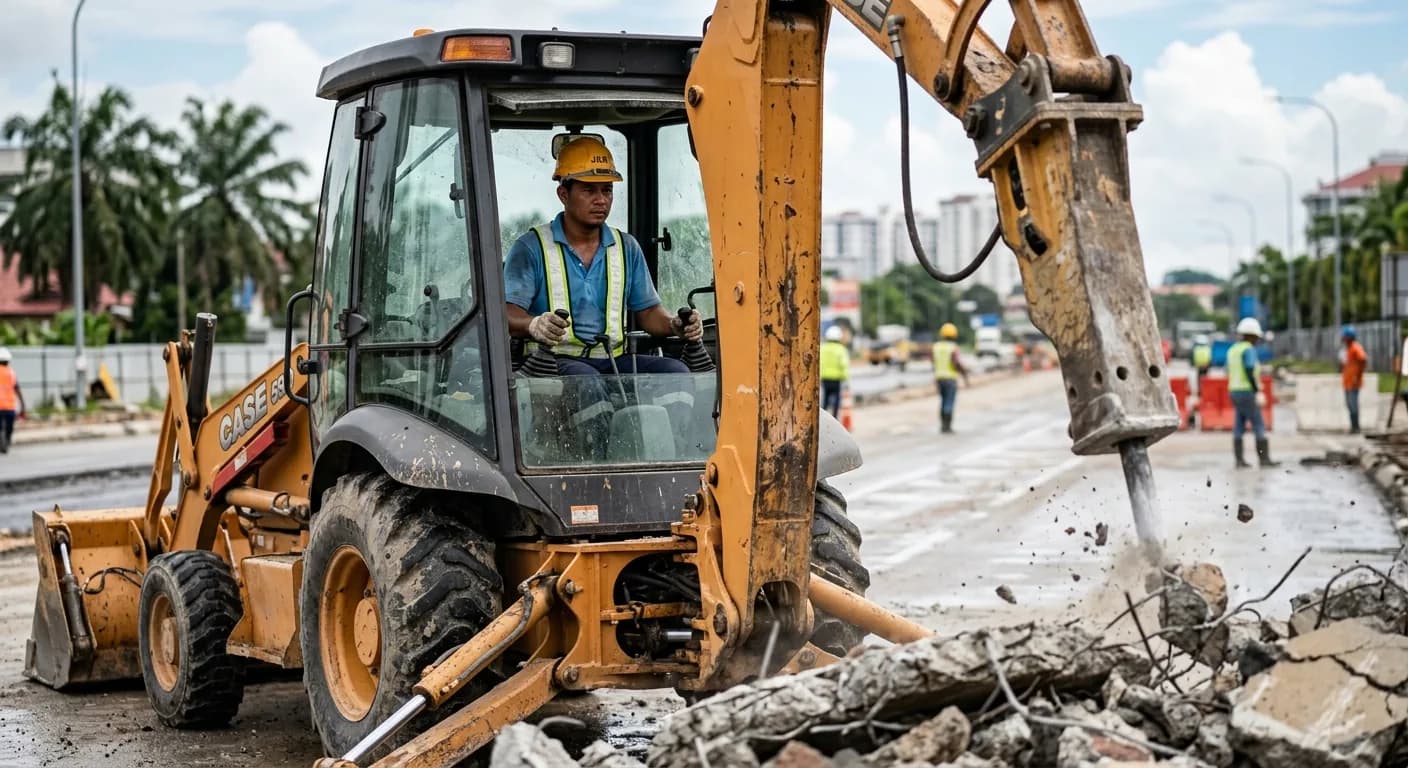
The basic difference
A backhoe is a two-ended machine — a digging bucket at the back, a loader at the front. An excavator does one job but does it harder: longer arm, full 360-degree slew and a much higher digging rate.
When a backhoe fits better
- Mixed work: dig a trench, then push and load spoil without swapping machines.
- Residential sites where the machine has to drive itself along sealed roads.
- Short one to three day jobs where excavator mobilisation is not worth it.
When an excavator fits better
- Digging beyond 15 feet, or retention pond work.
- Large soil volumes in a short window.
- Sustained demolition work.
Comparing cost
A standard backhoe at RM580 a day already includes the operator and drives itself between zones on site. An excavator usually needs a low-loader in and out, so mobilisation is added even when the daily rate looks similar.
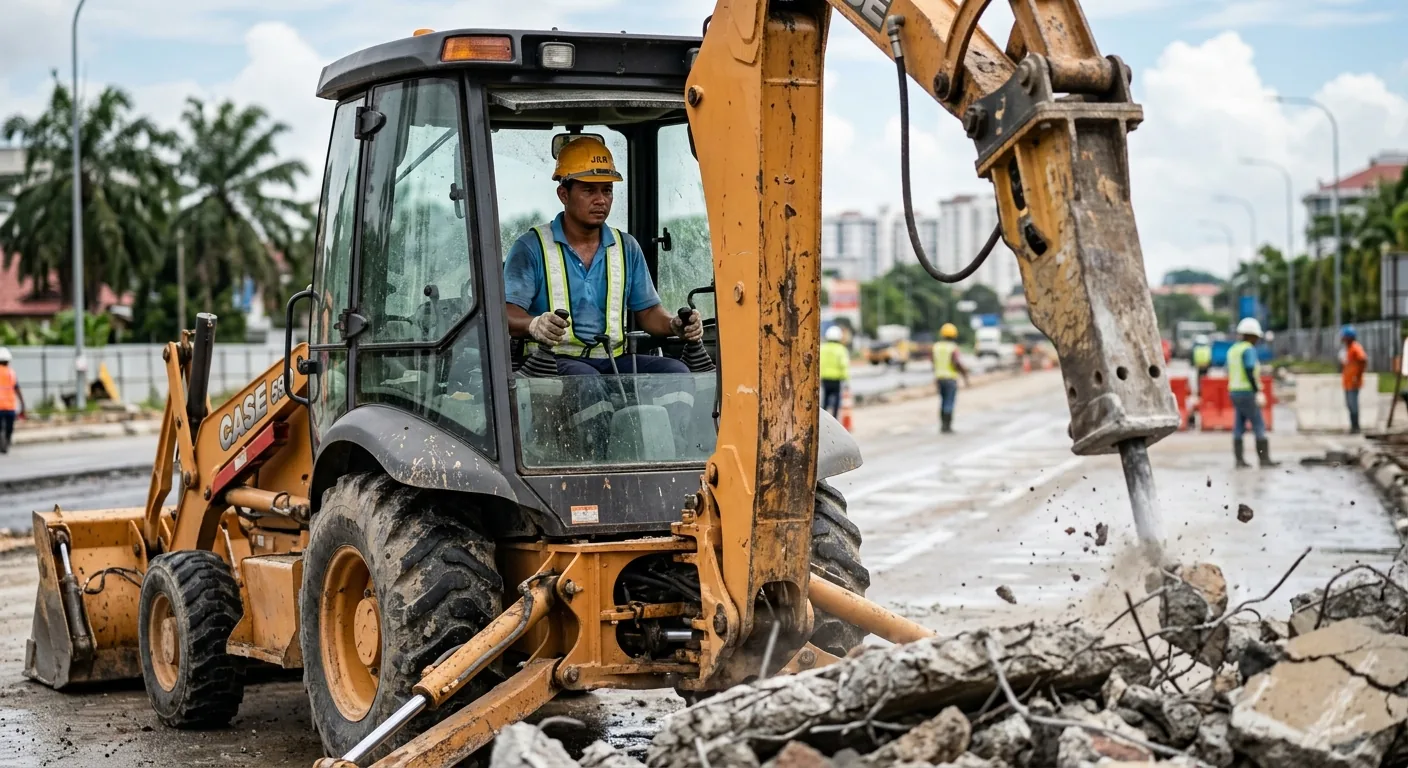
Short answer
If your job mixes digging and loading on a medium site, a backhoe is almost always cheaper. For large volumes and deep digging, the excavator wins. Not sure? WhatsApp us a photo of the site and we will suggest the right size.
How to decide in five minutes
Ask two questions: does the job need digging beyond 15 feet, and does a large volume of soil have to move every day? If the answer to both is no, a backhoe is enough and you save the excavator mobilisation cost.
On residential sites there is one more factor: mobility. A backhoe can drive itself between zones without a low-loader, so work scattered across several points finishes far faster.